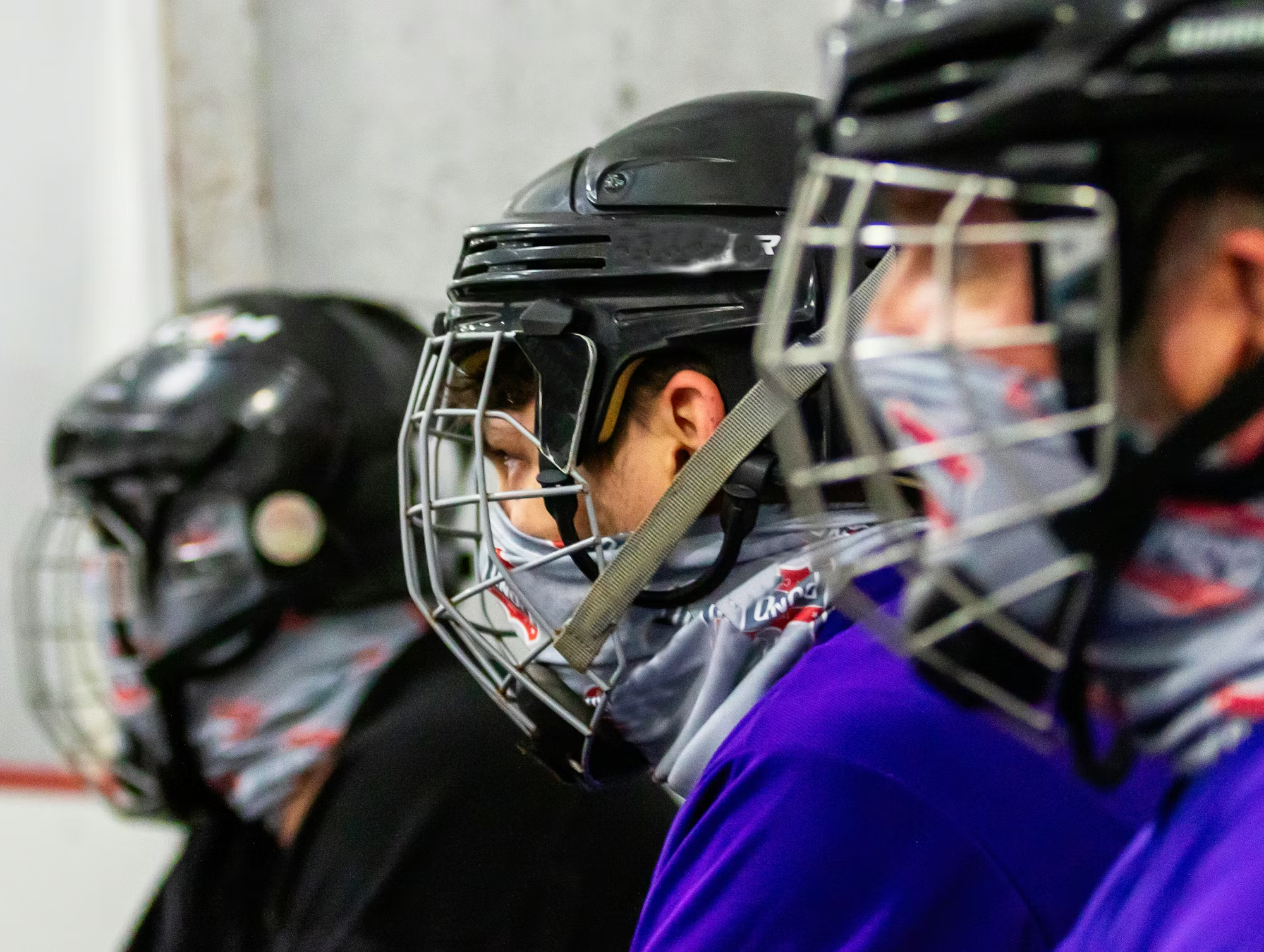
Hockey is a sport that demands a unique blend of physical prowess, mental acuity, and technical skill. Whether on ice or grass, mastering the fundamental skills and techniques is crucial for players aspiring to enhance their performance. This article delves into the essential components of hockey skills, providing insights into skating, stickhandling, passing, shooting, goaltending, and tactical strategies that are vital for success on the rink or field.
Skating: The Foundation of Hockey
Skating is the most fundamental skill in hockey, serving as the basis for almost every movement a player makes on the ice or field. Effective skating involves not only speed but also agility and balance. Players must develop a strong stride, which begins with the proper stance. A low center of gravity helps maintain balance while enabling explosive starts and quick stops.
Forward skating involves pushing off with one leg while gliding on the other, transitioning seamlessly between strides. Players should practice using their edges— the inside and outside of their skates— to turn sharply and accelerate quickly. Mastering backward skating is equally important, as it allows players to defend effectively and recover quickly during plays.
Stickhandling: Mastering Puck Control
Stickhandling is an essential skill that allows players to maintain control of the puck while navigating through opponents. It involves using the stick to move the puck quickly and efficiently, enabling players to create scoring opportunities or evade defenders. Developing effective stickhandling requires both practice and patience.
Players should focus on keeping the puck close to their body while maintaining a low, stable posture. Drills that incorporate both stationary and moving stickhandling can help improve coordination and dexterity. Using various surfaces, like cones or obstacles, allows players to simulate game situations, enhancing their ability to handle the puck under pressure.
Passing: The Art of Team Play
Passing is a crucial element of teamwork in hockey. Effective passing not only advances the play but also maintains possession of the puck. There are various types of passes—forehand, backhand, and saucer passes—each suited for different situations.
Players should prioritize accuracy and timing when executing passes. A good pass should arrive at a teammate’s stick in a position that allows for a quick transition to the next play. Practicing with a partner can enhance passing skills, allowing players to focus on both accuracy and the speed of their passes. Furthermore, players should be aware of their surroundings to anticipate where teammates will be, promoting effective communication on the ice or field.
Shooting: Scoring Goals
Shooting is perhaps the most exhilarating aspect of hockey, with each goal representing a moment of triumph for both players and fans. There are several types of shots: wrist shots, slap shots, snap shots, and backhand shots, each requiring different techniques and body mechanics.
Wrist shots, known for their accuracy and quick release, are effective in tight spaces, while slap shots provide power from distance. Players should focus on proper weight transfer and follow-through to maximize shot effectiveness. Practicing shooting from various angles and distances helps players develop a diverse scoring repertoire. Moreover, being aware of a goaltender’s positioning can create scoring opportunities, as players learn to shoot for openings rather than directly at the goalie.
Goaltending: The Last Line of Defense
Goaltending is a unique position that requires a specific skill set and mindset. Goalies must possess quick reflexes, excellent positioning, and the ability to read the play. A strong stance allows goalies to respond to shots effectively while maintaining balance and readiness.
Goalies should focus on tracking the puck, moving laterally to cover angles, and anticipating the shooter’s next move. Practicing with shooting drills can enhance a goalie’s reaction time and decision-making skills. Additionally, communication with defensemen is crucial; goalies must direct traffic in front of the net, helping to eliminate scoring chances by organizing their team’s defensive efforts.
Tactical Strategies: Enhancing Team Play
Beyond individual skills, understanding tactical strategies is vital for any hockey player. Strategies vary between ice hockey and field hockey but share the common goal of maximizing team efficiency and scoring opportunities. Players should familiarize themselves with concepts like forechecking, backchecking, and power plays.
Forechecking involves pressuring the opposing team in their defensive zone to regain possession of the puck. Effective forechecking requires coordination among forwards to create a collective pressure that forces mistakes from the opposition.
Backchecking is equally important, as it involves returning to a defensive position after an offensive play. Players should learn to anticipate plays and transition quickly from offense to defense to thwart opposing scoring chances.
During special situations, such as power plays or penalty kills, teams must adjust their tactics accordingly. A power play, where one team has a numerical advantage, allows for strategic offensive setups aimed at exploiting weaknesses in the opponent’s defense. Conversely, during a penalty kill, players need to focus on positioning and communication to minimize scoring opportunities for the opposing team.
The Importance of Practice and Development
To excel in hockey, consistent practice and development are key. Players should dedicate time to refining their skills individually while also focusing on team dynamics. Engaging in regular drills, participating in scrimmages, and seeking feedback from coaches can all contribute to player development.
Additionally, players should analyze their performances to identify areas for improvement. Watching game footage, both of themselves and professional players, can provide valuable insights into effective techniques and strategies. This continuous pursuit of improvement will not only enhance individual skills but also foster a more cohesive team dynamic.
Conclusion
Mastering the essential skills and techniques of hockey is crucial for players at any level. By focusing on skating, stickhandling, passing, shooting, goaltending, and tactical strategies, players can elevate their performance on the ice or field. Continuous practice, analysis, and adaptation to game situations will ultimately lead to success and enjoyment of this exhilarating sport. As players hone their skills, they contribute not only to their own development but also to the rich, collaborative spirit that defines hockey as a beloved sport worldwide.